
by Taylor Wolfram, MS, RDN, LDN and Jack Norris, RD
Contents
- Summary
- Requirements and Sources of Vitamin K
- Blood Clotting
- Bone Health
- Vitamin K2 and Cardiovascular Disease
- Bibliography
Summary
Vitamin K is needed for proper blood clotting and bone health. Vegans who eat leafy green vegetables with some added oil on a daily basis should receive more than adequate vitamin K. Even those who don’t might obtain enough vitamin K from intestinal bacteria, unless they’ve had a significant course of antibiotics. While we don’t think there’s enough evidence to suggest vegans generally need to supplement with vitamin K2, vegan supplements are available. Making sure you get plenty of vitamin K through leafy green vegetables is the best plan.
Requirements and Sources of Vitamin K
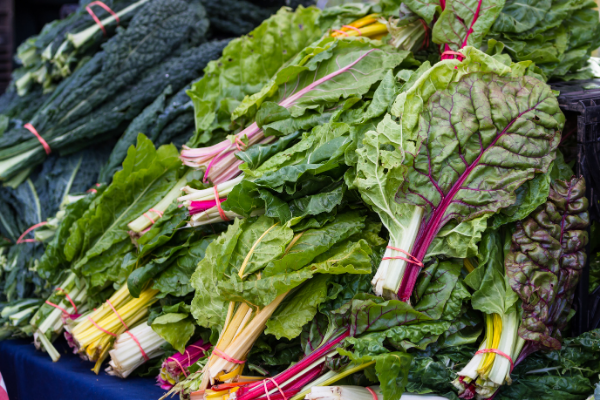
The Dietary Reference Intake for vitamin K is 120 µg for men and 90 µg for women. The table below shows the plant foods that are high in vitamin K.
| Table 1. Vitamin K in Plant Foods | |||||
|---|---|---|---|---|---|
| Food | Preparation | Serving | µg | ||
| Kale | shredded, boiled | 1/2 cup | 531 | ||
| Spinach | boiled | 1/2 cup | 442 | ||
| Collards | boiled | 1/2 cup | 418 | ||
| Swiss chard | boiled | 1/2 cup | 286 | ||
| Parsley | 10 sprigs | 10 g | 164 | ||
| Broccoli | boiled | 1/2 cup | 110 | ||
| Romaine lettuce | shredded | 1 cup | 48 | ||
| Source: USDA, 2019. | |||||
Vitamin K is a fat-soluble vitamin, and fat can significantly increase its absorption from food (Gijsbers, 1996). Since green leafy vegetables contain very little fat naturally, adding some fat or oil during preparation or eating them in a meal with fat will increase vitamin K absorption.
Blood Clotting
Vitamin K is needed for blood clotting. It also has activity in bones, and a deficiency can result in bone fractures, especially in old age.
Vitamin K refers to the chemical menadione, and any derivatives of it that exhibit anti-hemorrhagic activity in animals fed a vitamin K-deficient diet. There are two types of vitamin K:
- Phylloquinone (K1) – found primarily in plant foods; most prevalent in green leafy vegetables (Suttie, 2009).
- Menaquinone (K2) – found in animal tissues and produced by bacteria. The only vegan food high in menaquinone is natto (998 µg per 100 g portion) (Suttie, 2009). Vitamin K2 has varieties MK-4 thru MK-9.
According to the U.S. National Health and Nutrition Examination Survey data, the average total daily vitamin K intake from food is 138 µg for men and 122 µg for women (NIH, 2020). It therefore appears that getting enough vitamin K isn’t an issue for many adults in the U.S. The scientific consensus has been that either type of vitamin K is adequate, especially regarding blood clotting activity (NIH, 2020).
In the United States, enteral nutrition products, which are used for people who cannot eat normally and often provide the only nutrition they receive for months or years, contain phylloquinone (K1) and these patients have apparently normal blood clotting (Suttie, 2009).
Menaquinone (K2) is produced by a number of different bacteria species that typically live in the digestive tract of humans, and can be absorbed in the distal part of the small intestine (Conly, 1994; Suttie, 2009). Unless someone has had significant antibiotic therapy, they should have plenty of such bacteria providing them with menaquinone.
It’s difficult to induce vitamin K deficiency (measured by slow blood clotting) by removing vitamin K from the diet, presumably due to the production of vitamin K by intestinal bacteria (Suttie, 2009). However, it’s possible to induce slow blood clotting through antibiotic therapy, indicating intestinal bacteria provide a significant amount of vitamin K (Suttie, 2009).
One study measuring blood clotting in vegetarians and one measuring blood clotting in vegans did not show them to have slow blood clotting times (Mezzano, 1999; Sanders, 1992). An abnormal rate of blood clotting problems has not been apparent for children raised vegan from birth; it would be unusual for their diets to be supplemented with menaquinone (K2). It, therefore, seems safe to assume that vegans have no need for menaquinone supplementation; especially when it comes to blood clotting.
Bone Health
The evidence of vitamin K’s impact on bone health is mixed. Results of studies vary by dietary versus supplemental vitamin K, type of vitamin K supplement (K1 versus K2), types of bones studied, outcome variables (fracture risk, bone mineral density, bone mineral content, undercarboxylated osteocalcin, etc.), study population (age, sex, presence of osteoporosis, etc.), and more.
Vitamin K1 and Bone Health
A 2017 meta-analysis of four cohort studies and one nested case-control study found a dose-response relationship between dietary vitamin K1 intake and risk of fractures (RR 0.97, CI 0.95-0.99 for a 50 μg increase in dietary vitamin K1 daily—equating to a 3% decreased risk of total fractures) (Hao, 2017). Those with the highest intake of dietary vitamin K had a 22% reduced fracture risk (RR 0.78, CI 0.56–0.99), when compared with the lowest intake. There was a significant inverse association between dietary vitamin K1 intake and risk of total fractures in studies that included both men and women (RR 0.77, CI 0.61–0.94), but not in studies of only women (RR = 0.87, CI 0.64–1.10). There was a significant inverse association between dietary vitamin K1 intake and risk of total fractures in studies with more than 10 years of follow-up (RR 0.76, CI 0.58–0.93), but not in studies with less than 10 years of follow-up (RR 0.87, CI 0.66–1.07).
A 12-month study comparing vitamin K1 (1 mg/day), MK-4 (45 mg/day), and placebo found no significant differences in bone mineral density between the three groups (Binkley, 2009). The participants all received calcium and vitamin D supplements.
A three-year randomized controlled trial of 452 healthy older men and women comparing a 500 μg/day vitamin K1 supplement versus a placebo (both groups received calcium and vitamin D) found no significant difference in changes in bone mineral density (Booth, 2008).
A six-month randomized controlled trial of 14 women ages 25 to 50 years found no improvement in bone mineral density after six months of 600 μg/day of vitamin K1 (Volpe, 2008).
A two-year randomized controlled trial of 244 non-osteoporotic older women found supplementing with 200 μg/day of vitamin K1 plus 400 IU/day of vitamin D3 and 1,000 mg/day of calcium positively impacted bone mineral density and bone mineral content at the ultradistal radius (P < 0.01 for both) but not at other sites in the radius or hip (Bolton-Smith, 2007).
Based on this evidence, it appears that getting plenty of vitamin K from food is good for bones, but research is mixed on the impact of vitamin K1 supplements on bone health.
Vitamin K2 and Bone Health
Because vitamin K2 is not found in plant foods, some lay people have suggested you need to eat animal products in order to have adequate vitamin K status, especially for bones. We’re interested in knowing if vegans are at a higher risk of fracture due to not eating the amount of K2 typically eaten by meat-eaters, which is about 31 µg/day according to a study of post-menopausal women in the Netherlands (Beulens, 2009). Unfortunately, the intervention studies on vitamin K2 and bone health use pharmacological doses, which are much higher doses than what one would eat through food (Cockayne, 2006; Emaus, 2010; Huang, 2015; Je, 2011; Knapen, 2007; Tanaka, 2017).
The closest study to using a dietary dose of vitamin K2 is a 2013 trial which found that after 3 years of “low-dose” menaquinone-7 supplementation (180 μg MK-7/day), older women experienced significantly decreased age-related bone loss compared to those taking a placebo (P=0.011 for bone mineral content (BMC), P=0.012 for bone mineral density (BMD); after adjusting for age and body mass index: P=0.023 for BMC and P=0.014 for BMD) (Knapen, 2013). No fracture data were reported. Since this amount is about 5 times what the average meat-eater would eat, we can’t extrapolate that vegans are at a disadvantage.
Vitamin K2 and Cardiovascular Disease
There’s a plausible reason why vitamin K2 could prevent heart disease while vitamin K1 does not: vitamin K is needed for the production of a protein that has a strong affinity for calcium (Gast, 2009). And while vitamin K1 is primarily cleared from the bloodstream by the liver for use in blood coagulation, vitamin K2 remains in the blood where it can possibly prevent calcium from being deposited in artery walls (Gast, 2009). However, the research is mixed.
A prospective study from The Netherlands, The Rotterdam Study, found a strong association between intake of vitamin K2 and a reduced risk for cardiovascular disease (Geleijnse, 2004). In comparing the highest daily intake (> 33 µg) of vitamin K2 to the lowest (< 22 µg), the higher intake was associated with a 41% reduced risk for a diagnosis of heart disease (RR 0.59, CI 0.40-0.86), a 57% reduced risk of death from heart disease (RR 0.43, CI 0.24-0.77), and a 26% reduced risk of mortality (RR 0.74, CI 0.59-0.92). In a cross-sectional component, they also found an inverse relationship between vitamin K2 intake and artery calcification. There was no reduced risk associated with vitamin K1.
Another cross-sectional study from The Netherlands, EPIC-Prospect, found that the highest vitamin K2 intake, 42 µg/day, was associated with a reduced risk of coronary artery calcification (RR 0.80, CI 0.65–0.98) in comparison to the lowest category of 18 µg/day (10). MK-4 was the only vitamin K2 subtype that, when assessed alone, showed a trend toward less artery calcification, albeit weak (prevalence ratio 0.85, CI 0.69 – 1.04).
EPIC-PROSPECT followed over 16,000 women for an average of 8 years. Daily vitamin K2 intake averaged 29 µg (range: 1 to 128 µg). They found that each 10 µg increase in vitamin K2 was associated with a borderline significant, decreased risk of heart disease (RR 0.92, CI 0.85-1.00) (Gast, 2009).
In contrast to the findings from The Netherlands, after about 10 years of follow-up, the EPIC-Heidelberg cohort from Germany found vitamin K1 to be inversely associated with a fatal heart attack (RR 0.49, CI 0.25-0.94), while no statistical significance was found for K2 regarding increased incidence of heart disease (RR 1.21, CI 0.81–1.80) or increased fatal heart attack (RR 1.09, CI 0.46–2.62) (Nimptsch, 2010).
Another prospective study from The Netherlands combined data from EPIC-Prospect and EPIC-Morgen and looked at the association between vitamin K2 intake and stroke. No association was found, though the authors pointed out that artery calcification may not be a cause of stroke as it is for heart disease (Vissers, 2013).
And another study of combined data from EPIC-Prospect and EPIC-Morgen found that after 10 years there was a non-significant trend toward a lower risk of diabetes when comparing the upper (49 µg) to lower (15 µg) intakes of vitamin K2 (HR .80, CI .62–1.02), with a borderline significant trend for each 10 µg increase (HR 0.93, CI 0.87–1.00, P = 0.038) (Beulens, 2010).
From the research above, it appears that higher vitamin K2 intake could reduce the risk of heart disease. However, the only significant beneficial associations have come from one country, The Netherlands, and the findings have not been strong. Clinical trials are needed and one is underway (Kroon, 2018); as of November 2020, it hasn’t been published.
Studies using pharmacological doses are beyond the scope of our purpose, (including Ikari, 2016 and Nagasawa, 1998).
Even if vitamin K2 reduces the risk of heart disease, it doesn’t mean that animal products high in vitamin K2 reduce the risk. The authors of the 2009 EPIC-PROSPECT report caution against getting vitamin K2 through typical animal foods (Gast, 2009):
Thus, although our findings may have important practical implications on [cardiovascular disease] prevention, it is important to mention that in order to increase the intake of vitamin K2, increasing the portion of vitamin K2 rich foods in daily life might not be a good idea. Vitamin K2 might be, for instance more relevant in the form of a supplement or in low-fat dairy. More research into this is necessary.
Bibliography
Last updated December 2020
Beulens, 2009. Beulens JW, Bots ML, Atsma F, Bartelink ML, Prokop M, Geleijnse JM, Witteman JC, Grobbee DE, van der Schouw YT. High dietary menaquinone intake is associated with reduced coronary calcification. Atherosclerosis. 2009 Apr;203(2):489-93.
Beulens, 2010. Beulens JW, van der A DL, Grobbee DE, Sluijs I, Spijkerman AM, van der Schouw YT. Dietary phylloquinone and menaquinones intakes and risk of type 2 diabetes. Diabetes Care. 2010 Aug;33(8):1699-705. doi: 10.2337/dc09-2302. Epub 2010 Apr 27.
Binkley, 2009. Binkley N, Harke J, Krueger D, Engelke J, Vallarta-Ast N, Gemar D, Checovich M, Chappell R, Suttie J. Vitamin K treatment reduces undercarboxylated osteocalcin but does not alter bone turnover, density, or geometry in healthy postmenopausal North American women. J Bone Miner Res. 2009 Jun;24(6):983-91.
Bolton-Smith, 2007. Bolton-Smith C, McMurdo ME, Paterson CR, Mole PA, Harvey JM, Fenton ST, Prynne CJ, Mishra GD, Shearer MJ. Two-year randomized controlled trial of vitamin K1 (phylloquinone) and vitamin D3 plus calcium on the bone health of older women. J Bone Miner Res. 2007 Apr;22(4):509-19.
Booth, 2008. Booth SL, Dallal G, Shea MK, Gundberg C, Peterson JW, Dawson-Hughes B. Effect of vitamin K supplementation on bone loss in elderly men and women. J Clin Endocrinol Metab. 2008 Apr;93(4):1217-23.
Cockayne, 2006. Cockayne S, Adamson J, Lanham-New S, Shearer MJ, Gilbody S, Torgerson DJ. Vitamin K and the prevention of fractures: systematic review and meta-analysis of randomized controlled trials. Arch Intern Med. 2006 Jun 26;166(12):1256-61.
Conly, 1994. Conly JM, Stein K, Worobetz L, Rutledge-Harding S. The contribution of vitamin K2 (menaquinones) produced by the intestinal microflora to human nutritional requirements for vitamin K. Am J Gastroenterol. 1994 Jun;89(6):915-23. (Abstract)
Emaus, 2010. Emaus N, Gjesdal CG, Almås B, Christensen M, Grimsgaard AS, Berntsen GK, Salomonsen L, Fønnebø V. Vitamin K2 supplementation does not influence bone loss in early menopausal women: a randomised double-blind placebo-controlled trial. Osteoporos Int. 2010 Oct;21(10):1731-40. doi: 10.1007/s00198-009-1126-4. (Abstract)
Gast, 2009. Gast GC, de Roos NM, Sluijs I, Bots ML, Beulens JW, Geleijnse JM, Witteman JC, Grobbee DE, Peeters PH, van der Schouw YT. A high menaquinone intake reduces the incidence of coronary heart disease. Nutr Metab Cardiovasc Dis. 2009 Sep;19(7):504-10.
Geleijnse, 2004. Geleijnse JM, Vermeer C, Grobbee DE, Schurgers LJ, Knapen MH, van der Meer IM, Hofman A, Witteman JC. Dietary intake of menaquinone is associated with a reduced risk of coronary heart disease: the Rotterdam Study. J Nutr. 2004 Nov;134(11):3100-5.
Gijsbers, 1996. Gijsbers BL, Jie KS, Vermeer C. Effect of food composition on vitamin K absorption in human volunteers. Br J Nutr. 1996 Aug;76(2):223-9.
Ferland G. Vitamin K, an emerging nutrient in brain function. Biofactors. 2012 Mar-Apr;38(2):151-7. Not cited.
Hao, 2017. Hao G, Zhang B, Gu M, Chen C, Zhang Q, Zhang G, Cao X. Vitamin K intake and the risk of fractures: A meta-analysis. Medicine (Baltimore). 2017 Apr;96(17):e6725.
Huang, 2015. Huang ZB, Wan SL, Lu YJ, Ning L, Liu C, Fan SW. Does vitamin K2 play a role in the prevention and treatment of osteoporosis for postmenopausal women: a meta-analysis of randomized controlled trials. Osteoporos Int. 2015 Mar;26(3):1175-86.
Ikari, 2016. Ikari Y, Torii S, Shioi A, Okano T. Impact of menaquinone-4 supplementation on coronary artery calcification and arterial stiffness: an open label single arm study. Nutr J. 2016 May 12;15(1):53.
Je, 2011. Je SH, Joo NS, Choi BH, Kim KM, Kim BT, Park SB, Cho DY, Kim KN, Lee DJ. Vitamin K supplement along with vitamin D and calcium reduced serum concentration of undercarboxylated osteocalcin while increasing bone mineral density in Korean postmenopausal women over sixty-years-old. J Korean Med Sci. 2011 Aug;26(8):1093-8.
Knapen, 2007. Knapen MH, Schurgers LJ, Vermeer C. Vitamin K2 supplementation improves hip bone geometry and bone strength indices in postmenopausal women. Osteoporos Int. 2007 Jul;18(7):963-72.
Knapen, 2013. Knapen MH, Drummen NE, Smit E, Vermeer C, Theuwissen E. Three-year low-dose menaquinone-7 supplementation helps decrease bone loss in healthy postmenopausal women. Osteoporos Int. 2013 Sep;24(9):2499-507.
Kroon, 2018. Kroon A. The Effects of Vitamin K2 Supplementation on the Progression of Coronary Artery Calcification. ClinicalTrials.gov NCT01002157. Updated September 13, 2018. Accessed December 16, 2020.
Mezzano, 1999. Mezzano D, Munoz X, Martinez C, Cuevas A, Panes O, Aranda E, Guasch V, Strobel P, Munoz B, Rodriguez S, Pereira J, Leighton F. Vegetarians and cardiovascular risk factors: hemostasis, inflammatory markers and plasma homocysteine. Thromb Haemost 1999 Jun;81(6):913-7.
Nagasawa, 1998. Nagasawa Y, Fujii M, Kajimoto Y, Imai E, Hori M. Vitamin K2 and serum cholesterol in patients on continuous ambulatory peritoneal dialysis. Lancet. 1998 Mar 7;351(9104):724.
Nimptsch, 2010. Nimptsch K, Rohrmann S, Linseisen J, Kaaks R. Dietary intake of vitamin K and risk of incident and fatal myocardial infarction in the EPIC-Heidelberg cohort study Gesundheitswesen 2010; 72: V143-DOI: 10.1055/s-0030-1266323. (Abstract)
NIH, 2020. Vitamin K Fact Sheet for Health Professionals. National Institutes of Health Office of Dietary Supplements. Updated June 3, 2020. Accessed December 2, 2020.
Rees K, Guraewal S, Wong YL, Majanbu DL, Mavrodaris A, Stranges S, Kandala NB, Clarke A, Franco OH. Is vitamin K consumption associated with cardio-metabolic disorders? A systematic review. Maturitas. 2010 Oct;67(2):121-8. Not cited.
Sanders, 1992. Sanders TA, Roshanai F. Platelet phospholipid fatty acid composition and function in vegans compared with age- and sex-matched omnivore controls. Eur J Clin Nutr. 1992 Nov;46(11):823-31. Same study population as citation 25.
Shearer MJ, Newman P. Metabolism and cell biology of vitamin K. Thromb Haemost. 2008 Oct;100(4):530-47. Not cited.
Suttie, 2009. Suttie JW. Vitamin K in Health and Disease. CRC Press, Boca Raton, FL. 2009.
Tanaka, 2017. Tanaka S, Miyazaki T, Uemura Y, Miyakawa N, Gorai I, Nakamura T, Fukunaga M, Ohashi Y, Ohta H, Mori S, Hagino H, Hosoi T, Sugimoto T, Itoi E, Orimo H, Shiraki M. Comparison of concurrent treatment with vitamin K2 and risedronate compared with treatment with risedronate alone in patients with osteoporosis: Japanese Osteoporosis Intervention Trial-03. J Bone Miner Metab. 2017 Jul;35(4):385-395. (Abstract)
Thijssen HH, Drittij MJ, Vermeer C, Schoffelen E. Menaquinone-4 in breast milk is derived from dietary phylloquinone. Br J Nutr. 2002 Mar;87(3):219-26. Not cited.
USDA, 2019. U.S. Department of Agriculture, Agricultural Research Service. FoodData Central, 2019.
Vissers, 2013. Vissers LE, Dalmeijer GW, Boer JM, Monique Verschuren WM, van der Schouw YT, Beulens JW. Intake of dietary phylloquinone and menaquinones and risk of stroke. J Am Heart Assoc. 2013 Dec 10;2(6):e000455.
Volpe, 2008. Volpe SL, Leung MM, Giordano H. Vitamin K supplementation does not significantly impact bone mineral density and biochemical markers of bone in pre- and perimenopausal women. Nutr Res. 2008 Sep;28(9):577-82.
2 thoughts on “Vitamin K”
I would add a parsley to the list of foods that are rich in vitamin K.
Only 7 grams of fresh parsley is enough to meet our daily recommendations. And it’s pretty easy to eat such a small amount of that.
> I would add a parsley to the list of foods
Done. Thank you.